Thinkaloud - Voice-First Thinking Workspace for Solo Founders
Think out loud. Find every idea.
Thinkaloud is a voice-first thinking workspace for solo founders. It turns rambling spoken thoughts, and the backlog of voice memos you already have, into searchable, titled and prioritized ideas with clear next steps. It also works as an on-demand sounding board for decisions you would normally talk through with a cofounder.
- First revenue
- 45-90 days
- Capital
- $5K-$20K
- Difficulty
- Moderate
- Year one
- $20K-$35K
- Ceiling
- $3M-6M ARR
Researched 18 Nov 2026
The easier it is to record, the harder it is to find
- Who it's for
- solo founders and solopreneurs who think out loud and have dozens or hundreds of unlabeled voice memos
- What it does
- a voice-first thinking workspace that indexes the recordings already on your phone, titles and links them by project, and turns spoken rambling into ranked ideas, decisions and next steps, with an on-demand 'talk it through' partner for decisions
- What changes
- Hundreds of unlabeled voice memos you can't search become a titled, searchable library of ideas with next steps.
- Biggest risk
- Voicenotes ($9/mo Pro), Compass, Kipnote and Founder Note already target founders directly with voice notes and can add backlog import quickly.
Voice capture just went mainstream, and crowded
By June 2026, four federal lawsuits over AI notetaker consent violations were pending, and voice capture went mainstream with Pocket reaching a $100M annualized run rate by August 2026.
AI meeting bots such as Otter.ai and Fireflies face four federal lawsuits over consent violations, plus a privilege-waiver ruling from the Southern District of New York. One participant's notetaker bot can strip attorney-client privilege from an entire conversation, which matters for founders discussing deal terms on Zoom.
Startup FortunePocket, a clip-on AI device for capturing conversations, grew from $1M to $100M in annualized run rate in seven months and has put more than 270,000 devices into the world. Lobster Capital invested in it.
Lobster Capital (Substack)Superhuman acquired Y Combinator-backed notetaker Fathom rather than building one internally, joining a wave of productivity platforms launching notetakers.
TechCrunchSandbar, which makes the Stream voice ring for capturing notes and ideas, raised a $23M Series A led by Adjacent and Kindred Ventures, bringing total funding to $36M.
PR NewswireDictation app Wispr Flow officially launched a meeting notetaker for Mac that uses system audio, cleans up transcripts, creates action items, and lets users query meeting history with AI. It is similar to Granola's notetaker.
TechCrunchElevenLabs released ElevenAI, an experimental preview app combining meeting note-taking, dictation, and agent integration. TechCrunch notes that Fireflies, Wispr Flow, and Granola all released competing dictation and meeting capabilities in the preceding few months.
TechCrunchThe pain, in their own words
6 quotes“It is a retrieval problem, and it has a specific shape: the moment your captures outgrew your memory of them, the folder stopped being an archive and became a wall.”
“The Voice Memos app is extremely useful… until you have hundreds of unlabeled memos and you can't be bothered to go through and find what you need.”
“This is the voice memo paradox: the easier it becomes to record, the harder it becomes to find.”
“Recording reluctance: You stop recording ideas because you know you won't find them”
Everyone captures new notes. Nobody rescues the old ones.
8 competitors mapped| Product | From | What it does | The gap |
|---|---|---|---|
|
|
The built-in iPhone and Mac recording app, named by the builder as ... | Built for speech, so sung words over an instrument come t... | |
|
|
Free · Prime $33 (3 month... | An AI voice-to-text app that turns rambling voice notes into rewrit... | — |
|
|
Basic $0 · Cleft Plus $6.... | A privacy-focused Apple voice-note app with on-device transcription... | — |
|
|
14-day free trial, then $... | A voice-first notebook for founders that connects ideas, insights a... | — |
|
|
Free · Pro $14.99/mo · Pl... | A voice-first productivity app for founders that transcribes spoken... | — |
|
|
A free, lightweight note-taking app from Google for quick notes and... | — | |
|
|
Free · Pro $20/mo | An AI notes tool for founders that turns a recorded voice memo into... | — |
|
|
Basic $0 · Pro $9/user/mo... | An AI voice-note app that transcribes spoken thoughts and lets user... | — |
Watch it. The wedge is real, the crowd is bigger.
watch medium confidenceThe backlog-retrieval pain is real, but at least five tools already target founders with voice notes, so only build if you can prove the existing-memo rescue wedge converts.
✓Why it works
- +Retrieval pain is repeated across independent sources ('the easier it becomes to record, the harder it becomes to find') and leads to people no longer recording ideas.
- +Competitor positioning centers on new captures; no named rival leads with rescuing an existing backlog of recordings, per the positioning recommendation.
- +Voice capture is going mainstream: Pocket reached $100M ARR in seven months and Sandbar raised a $23M Series A, which shows buyers are accepting the habit.
- +Price anchors from Voicenotes at $9/mo and Cleft at $6.99/mo show a working ~$7-15/mo band, and an MVP is cheap to build on existing speech-to-text APIs.
!What could kill it
- −Voicenotes, Compass, Kipnote and Founder Note already target founders directly with voice notes at $9-$25/mo.
- −Big platforms are moving in: Superhuman acquired Fathom, and Wispr Flow, Granola, Fireflies and ElevenLabs all shipped note capture within months.
- −Evidence is thin and mostly from songwriters, not founders, and there is no quoted willingness to pay.
- −Search demand for the target terms is near zero and the micro-SaaS median MRR is $145, so reaching paying users will be slow.
Risks & mitigations
Voicenotes ($9/mo Pro), Compass, Kipnote and Founder Note already target founders directly with voice notes and can add backlog import quickly.
HighMitigation: Lead with the existing-memo rescue and the one-time Backlog Rescue offer, which none of them leads with, and build the thinking-partner features as the retention moat.
Platforms are absorbing the category: Superhuman acquired Fathom, and Wispr Flow, Granola, Fireflies and ElevenLabs shipped note and dictation features within months.
HighMitigation: Stay a solo-founder, personal-thinking product (not meetings or teams) and keep the product narrow and fast to iterate; avoid competing on transcription quality itself.
Privacy and consent: four federal lawsuits over AI notetaker consent, and the EU AI Act applies to startups serving EU customers, while users hand over personal audio.
MediumMitigation: Offer on-device transcription (as Cleft does), never alter originals, avoid recording others by default, publish a clear data policy, and delete audio on request.
Demand evidence is thin: the pain quotes come mostly from songwriting content, with no quoted willingness to pay, and micro-SaaS median MRR is $145.
MediumMitigation: Pre-sell the $19 Backlog Rescue to 30 founders before building fully; if fewer than 10% of interviewed founders pay, pivot or stop.
Search demand is near zero (solo founder volume 2, indie hacker 0), so organic and paid search will not drive acquisition.
MediumMitigation: Rely on founder communities, build-in-public content and direct outreach, and measure cost per paying user from the first 100 signups.
240 customers, $2.9K a month, and an honest ramp
EstimatesGo-to-market
- Launch strategy
- Skip SEO and paid search, since search volume for solo founder terms is near zero. Launch with a Show HN and Product Hunt post built around one hook: 'You have 300 voice memos you will never listen to. Find your ideas in 5 minutes.' Use the Pocket $100M ARR story and the AI notetaker consent lawsuits as content hooks, positioning Thinkaloud as private, solo thinking capture rather than a meeting bot. Differentiate against Voicenotes, the incumbent, by showing backlog rescue on existing recordings.
- First 100 users
- Personally message 150 solo founders who post about voice notes or 'too many ideas' on X, Indie Hackers and LinkedIn, offering the free 20-memo triage in exchange for feedback. Post a build-in-public thread showing a before/after of a 400-memo backlog. Guest in 3-5 solo-founder newsletters and podcasts with a free-triage offer. Convert the most active triage users into the $19 Backlog Rescue.
- Pricing validation
- Pre-sell Backlog Rescue at $19 and Pro at $12/mo to the first 30 interviewees before the full build. Test $9 vs $12 vs $15/mo against Voicenotes at $9, Compass at $9.99 and Founder Note at $14.99, and track free-to-paid conversion against the 7% assumption.
Turn this research into a build plan
The wizard drafts the remaining steps from this idea in seconds.
Run any agent on this idea
 Founder Archetype
Ten quick scenarios reveal which of six builder types you are — Maker, Hustler, Closer, Storyteller, Connector or Visionary — plus your wing, your blind spot, and who to build with.
~10 min
 Check Founder Fit
Is this idea actually right for you? A fast, honest gut-check.
~5 min
 Funnel Architect
Design the full funnel from traffic source through lead capture to conversion.
20–40 min
 Master Money Model
Pricing, revenue streams, cohorts and simple financial projections.
15–30 min
 Landing Page Architect
Write and build conversion-optimized landing pages for lead capture or sales.
15–30 min
 Lead Magnet Legend
Design lead magnets and hooks that bridge to your main offer.
15–25 min
Year one, on a napkin
$20K-$35K year 1What the first year looks like if the assumptions hold.
Prices are anchored to real competitor tiers ($6.99-$20/mo); reach, signup, conversion and churn rates are guesses, and no willingness-to-pay data was found.
Value Equation Breakdown
Alex Hormozi's framework for understanding if an idea will be easy to sell. Higher scores = easier sell.
5.5/10
↑Maximize these
Speak any thought and never lose it: every idea is searchable, connected to the right project, and turned into a next step. Honest limit: the AI cannot decide which idea is actually good.
Moderate. The backlog pain is well documented in several independent sources, but most evidence comes from songwriting content, and nine direct competitors already promise similar outcomes.
↓Minimize these
Minutes for the first import and search; the habit and weekly review payoff take 2-4 weeks.
Switching from the built-in recorder, granting access to existing memos, and learning a new capture habit. Privacy concerns around uploading personal audio are a real hurdle.
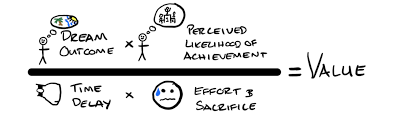
Alex Hormozi's Value Equation from $100M Offers. The higher your score, the easier your offer is to sell.
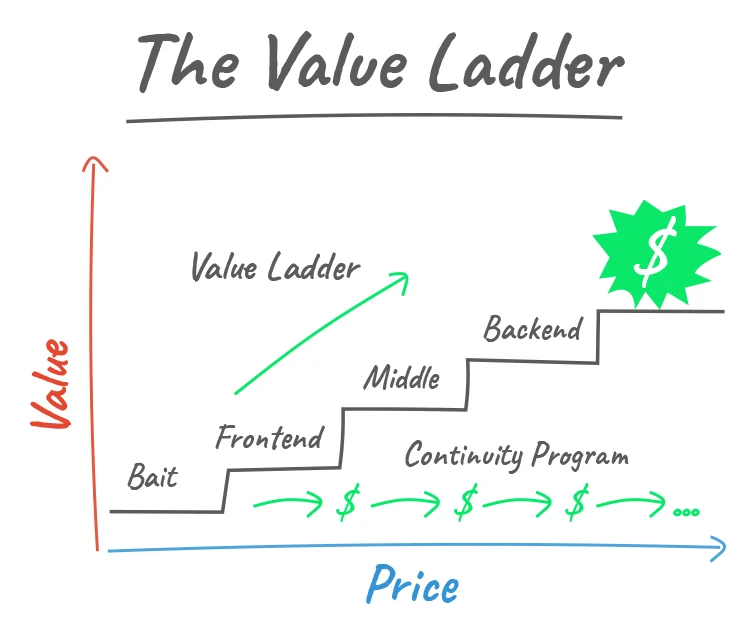
Understanding the Value Ladder
The Value Ladder structures your offers in ascending levels of value and price. Start with something irresistible and low-barrier, then build trust and deliver more value at each step up.
Why it works
The stages
Free value that builds trust and captures leads.
Low-ticket product that converts leads into buyers.
Your main product delivering the full solution.
Ongoing value through memberships or add-ons.
Premium, high-ticket solution for your best customers.
Framework: Russell Brunson — DotCom Secrets