AgentCheckout QA - Regression Tests for AI-Agent Checkout
Find where AI agents fail at checkout
Agent Checkout Tester runs simulated AI shopping agents, both browser-based and protocol-based (MCP, ACP, UCP), through your store's product discovery, cart and checkout flow with simulated payments. It pinpoints the exact step where an agent stalls and re-runs on a schedule to catch regressions after theme, app or platform changes.
- First revenue
- 45-90 days
- Capital
- $5K-$20K
- Difficulty
- Moderate
- Year one
- $50K-$80K
- Ceiling
- $3M-8M ARR
Researched 29 Oct 2026
Agents fail at checkout, and nobody sees it
- Who it's for
- ecommerce developers, QA engineers and agencies maintaining Shopify, WooCommerce and headless stores that need to sell through AI shopping agents
- What it does
- an automated agent-checkout test service that runs simulated browser and protocol (MCP, ACP, UCP) agents through your store with simulated payments, pinpoints the failing step and re-runs on a schedule to catch regressions
- What changes
- A 10-minute rerun to see whether an agent still fails at checkout becomes a scheduled test that names the failing step.
- Biggest risk
- SynthCommerce already offers a free UCP/ACP validator with paid regression diffs, monitoring and evidence reports from $39/mo, overlapping the core wedge.
Agents are buying. Almost no one tests the checkout.
Google and Shopify launched the Universal Commerce Protocol on Jan 11, 2026, and by Oct 2026 AI shopping orders are up 15X on Shopify while retailers still aren't testing agent checkout.
Google and Shopify launched the Universal Commerce Protocol on January 11, 2026, a standard that lets AI agents browse, search and buy from online stores without a human touching the checkout. UCP Checker began crawling and probing stores' endpoints to test whether they actually work for agents.
UCP Checker BlogAI shopping orders are up 15X on Shopify, but QAwerk's testing shows checkout, product data and refunds aren't ready for agents moving at machine speed.
Search Engine JournalIntelligent Retail reported on Sept 24, 2026 that retailers are racing to be found by AI agents but few are testing the checkout, with product data, checkout, returns and payment systems facing a new challenge from machine-driven transactions.
Intelligent Retail.techAdobe reported that AI-driven traffic to U.S. retail sites grew over 4,700% during 2025, and Cloudflare found this summer that automated bots now generate more web traffic than people do. OpenAI/Stripe's Agentic Commerce Protocol is among the frameworks already live.
Loeb & Loeb LLPBCG reported on Oct 21, 2026 that 68% of retailers expect agentic commerce to have a significant or transformational effect within two years.
BCGMcKinsey's Oct 28, 2026 analysis of about 21,000 consumers shows AI shopping behavior growing, with early evidence that companies are not yet equipped to meet the rising demand. ChatGPT and Gemini have each crossed 1 billion monthly active users.
McKinseyThe pain, in developers' own words
6 quotes“But the last straw was when we built an e-commerce agent that could buy items online. It kept failing at checkout, and every one-line change, tweaking a prompt, switching to Llama, adjusting tool logic, meant another ...”
“it seems that the select field of Country/Region doesn't work when you have Astra theme on. So i started looking for the solution everywhere and i couldn't find anything when searching on google, a lot of discussions ...”
“The problem I’m exploring is reliability: how to make agent-driven browser execution fail deterministically and explainably instead of half-working when layouts change.”
“Variant resolution is where most agents fail. The ones that reach checkout consistently call get_product_details to resolve variant IDs before carting. Those that skip this step guess, hit type errors, and drop off.”
Scanners are crowded. Regression isn't.
8 competitors mapped| Product | From | What it does | The gap |
|---|---|---|---|
|
|
Scans a site to show what AI agents can reach, read and act on, the... | — | |
|
|
Free ($0 forever); Starte... | Free UCP and ACP validator with paid scenario QA, monitoring, regre... | — |
|
|
Test harness that points real AI shopping agents at UCP stores to d... | — | |
|
|
Fix Pack $39 one-time; St... | Free AI agent shopping simulator that tests UCP agent flows and che... | — |
|
|
Free CRO audit; One page ... | Lets you enter a site and watch an AI shopping agent try to buy fro... | Appears to be a lead-gen funnel into paid rebuild service... |
|
|
Open-source CLI that tests and validates ACP Agentic Checkout endpo... | Protocol-level validation only, with no simulated shoppin... | |
|
|
No-code browser test automation that records user flows and reruns ... | Intermittent failures with unclear causes | |
|
|
Monitoring-as-code platform that runs Playwright browser and API ch... | Pricing tiers and usage quotas feel rigid |
Watch it. The wedge is regression, not scanning.
watch medium confidenceThe pain is real and the timing is open, but six direct competitors and near-zero search demand make this a 'build only with a sharp regression wedge and a community-led launch' idea.
✓Why it works
- +The top pain point is concrete: a team's e-commerce agent 'kept failing at checkout' with a 10-minute rerun per change, which a repeatable step-level tester removes.
- +Why-now is strong: UCP launched Jan 2026, AI shopping orders on Shopify are up 15X, and Intelligent Retail reports retailers aren't testing the checkout.
- +A real gap exists: competitors split between spec validators (spck.dev, nekuda) and one-off agent runs (CanItBuy, Convertica), leaving continuous regression for both browser and protocol agents open.
- +Pricing anchors are low ($9-$39/mo), so a developer-priced plan can be tried quickly with low switching cost.
!What could kill it
- −SynthCommerce already offers a free UCP/ACP validator plus paid regression diffs and monitoring at $39/mo, covering much of the wedge.
- −Free tools (UCPtools simulator, Convertica test, spck.dev, nekuda CLI) cap willingness to pay for basic scans.
- −Search demand is tiny (AI shopping agent volume 3), so inbound is weak and distribution depends on community and outbound.
- −Standards (MCP, ACP, UCP) are changing fast, and Constructor, Stellagent and platform vendors could bundle checks into their own products.
Risks & mitigations
SynthCommerce already offers a free UCP/ACP validator with paid regression diffs, monitoring and evidence reports from $39/mo, overlapping the core wedge.
HighMitigation: Differentiate on browser-agent step traces plus protocol coverage in one run, and on developer workflow (CI gate, staging stores), then validate with 10 design-partner agencies before building broadly.
Free tools (UCPtools simulator, Convertica test, spck.dev, nekuda CLI) set a $0-$9 expectation for basic scans.
HighMitigation: Keep the single scan free and charge only for recurring regression runs, diffs and alerts, which free tools do not provide.
Google Trends shows near-zero volume ('AI shopping agent' at 3, 'agentic commerce' at 11), so inbound search will not fill the funnel.
MediumMitigation: Lead with community (r/shopify, r/woocommerce, r/AI_Agents), Hacker News-style technical writeups and outbound to agencies instead of SEO or paid search.
ACP, UCP and MCP standards are changing fast, and some signals suggest weak adoption (reports that Meta's and ChatGPT's instant checkout were abandoned for lack of user uptake).
MediumMitigation: Make the test engine protocol-agnostic with browser agents as the base, and sell regression value that holds even if one protocol fades.
Platform and agent vendors (Shopify with UCP, Stripe with ACP, Constructor, Stellagent's Agentic Commerce Studio) could ship built-in checkout validation.
MediumMitigation: Position as the neutral, multi-platform layer for agencies and cross-platform stores, and integrate with those platforms rather than compete head-on.
105 Pro stores, 8 agencies, $8.2K a month
EstimatesGo-to-market
- Launch strategy
- Search demand is near zero (AI shopping agent: 3, agentic commerce: 11), so SEO and paid search are not the wedge; lead with community and outbound. Launch the free no-payment agent scan with a public 'where agents fail at checkout' benchmark of real stores, using the Jan 2026 UCP launch, the Shopify 15X AI order growth, and the Intelligent Retail 'few are testing the checkout' coverage as the hook. Wedge against SynthCommerce and CanItBuy on continuous regression with per-step diagnosis, not a one-time score.
- First 100 users
- Run the free scan on 300 stores found via Shopify and WooCommerce communities and send each owner their step-level result. Cold-email 100 Shopify and WooCommerce agencies offering a free multi-store audit, post failure writeups in r/AI_Agents, r/shopify and r/woocommerce, and do a Show HN. Convert the top 20 agencies into design partners, then use their referrals for the remaining users.
- Pricing validation
- Test the $49 Fix Report and $59/mo Pro against the $39 SynthCommerce Starter and $9-$39 UCPtools price points. Pre-sell Pro to 10 agency design partners before building scheduling, and A/B the Agency plan at $199 and $249/mo.
Turn this research into a build plan
The wizard drafts the remaining steps from this idea in seconds.
Run any agent on this idea
 Founder Archetype
Ten quick scenarios reveal which of six builder types you are — Maker, Hustler, Closer, Storyteller, Connector or Visionary — plus your wing, your blind spot, and who to build with.
~10 min
 Check Founder Fit
Is this idea actually right for you? A fast, honest gut-check.
~5 min
 Funnel Architect
Design the full funnel from traffic source through lead capture to conversion.
20–40 min
 Master Money Model
Pricing, revenue streams, cohorts and simple financial projections.
15–30 min
 Landing Page Architect
Write and build conversion-optimized landing pages for lead capture or sales.
15–30 min
 Lead Magnet Legend
Design lead magnets and hooks that bridge to your main offer.
15–25 min
Year one, on a napkin
$50K-$80K year 1What the first year looks like if the assumptions hold.
Prices are anchored to real competitor tiers ($9-$39/mo, $39 one-time), but traffic, conversion and retention rates are assumptions; recurring revenue is ramped across the year, so year-one cash is well below the ARR run-rate.
Value Equation Breakdown
Alex Hormozi's framework for understanding if an idea will be easy to sell. Higher scores = easier sell.
5.5/10
↑Maximize these
Every agent checkout failure is caught and explained before it costs a sale, and developers ship theme and app changes with confidence that AI agents can still buy. It does not guarantee agent-driven revenue, which depends on agent adoption.
Moderate. Pain is concrete (10-minute rerun loops, silent failures) and tools like SynthCommerce, CanItBuy and UCP Playground show demand exists. However, direct pain evidence is thin and agent checkout volume is still early.
↓Minimize these
A first scan result arrives in minutes. Value from regression monitoring builds over weeks as stores change.
Low effort to start: enter a store URL and run a no-payment scan. Ongoing effort comes from connecting a staging store or CI, and from trusting a new vendor over free validators.
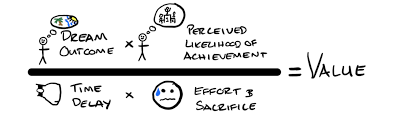
Alex Hormozi's Value Equation from $100M Offers. The higher your score, the easier your offer is to sell.
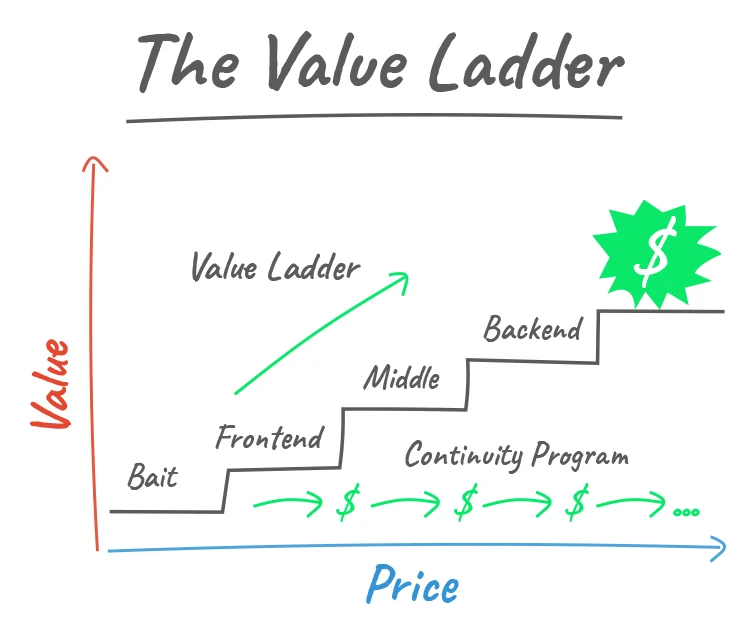
Understanding the Value Ladder
The Value Ladder structures your offers in ascending levels of value and price. Start with something irresistible and low-barrier, then build trust and deliver more value at each step up.
Why it works
The stages
Free value that builds trust and captures leads.
Low-ticket product that converts leads into buyers.
Your main product delivering the full solution.
Ongoing value through memberships or add-ons.
Premium, high-ticket solution for your best customers.
Framework: Russell Brunson — DotCom Secrets