FlareCast - Gout Flare Predictor
Know your gout flare before it hits
A mobile gout management app that learns each patient's personal triggers from low-effort logs, hydration, medication adherence, sleep and uric acid readings. It then gives a daily, transparent flare-risk signal so users can act before an attack. It also produces doctor-ready reports.
- First revenue
- 90-150 days
- Capital
- $15K-$40K
- Difficulty
- High
- Year one
- $15K-$30K
- Ceiling
- $3M-6M ARR
Researched 7 Nov 2026
Clean diet, same flares: gout still feels random
- Who it's for
- adults with gout and recurring flares, especially those on urate-lowering therapy, who log symptoms and food manually
- What it does
- a mobile app that turns low-effort daily check-ins, hydration, sleep, medication adherence and uric acid results into a transparent, personalized daily flare-risk signal with plain-language reasons and doctor-ready reports
- What changes
- Guessing at random flares and keeping a diary becomes a 30-second daily check-in and a clear warning before the next attack.
- Biggest risk
- Gout Compass already markets a daily 0-100 flare-risk score with wearable inputs, and GoutIQ offers AI-suggested flare predictions, so prediction is not unique.
App-supported gout care just beat usual care 85% to 49%
A smartphone-run gout programme hit the urate target in 85% of patients vs 49% on usual care (reported Nov 4, 2026), as FDA and Australia's TGA loosened rules for self-management software in early 2026.
A 12-month single-centre trial of 280 men found 85% on an app-supported treat-to-target model reached the serum-urate goal, versus 49% (48.6%) on usual care (open-label, one hospital; published in Arthritis & Rheumatology and reported Nov 4, 2026).
Health NewspapersOn January 6, 2026, the FDA published revised final guidance on Clinical Decision Support Software and its General Wellness Policy for Low Risk Devices, updating the rules that govern digital health products.
Ropes & GrayAustralia's TGA published guidance on 16 March 2026 explaining when consumer software for self-managing an existing disease or health condition may be excluded from its regulatory requirements. It published a companion guidance on the general health or wellness software exclusion the same day.
Therapeutic Goods Administration (TGA)The ReMonit Gout feasibility study (published March 2026) tested a self-management app in a digital treat-to-target gout-care approach, from researchers at Diakonhjemmet Hospital in Oslo.
Scandinavian Journal of Rheumatology (Taylor & Francis)A randomized controlled trial of a smart gout management system (published May 2026) improved self-management ability, serum uric acid control and renal markers in suburban community patients.
EMJ ReviewsA June 2026 Arthritis Care & Research study evaluated the reliability of an electronic, self-reported gout flare assessment against staff-conducted telephone questionnaires. It was run within the TRUST trial, which uses flares as its primary outcome, and the study notes that assessing gout flares is difficult.
Arthritis Care & ResearchGout patients, in their own words
6 quotes“i need to know if this is normal. i know what i consume for the past few days wouldn't cause flare up. I'm keeping up with my allopurinol and i take extreme care of what i eat daily. i need advice.how to stop this fro...”
“Now im at 9.7 after cleaning up my diet, back to back flares for the last 6 months. No meat, no alcohol, no added sugars.”
“Sometimes we put in a lot of effort for 4–6 months—following a proper diet, staying hydrated, exercising, and making lifestyle changes—and the uric acid level still seems to rise suddenly, sometimes followed by anothe...”
“I’d like to get a better understanding of which foods trigger my attacks. Are they are any apps that are particularly good for this for gout? I’ve never tracked my food consumption like this so something with a low ba...”
Everyone logs flares; almost no one predicts them
8 competitors mapped| Product | From | What it does | The gap |
|---|---|---|---|
|
|
Free forever (unlimited f... | Gout tracking app for logging flares, uric acid readings and appoin... | Triggers are logged manually by the user ('what you think... |
|
|
Gout-focused self-management app named by the builder as a known co... | — | |
|
|
Free €0 forever; Premium ... | Gout tracking app covering meals, flares, medication, water and uri... | — |
|
|
Gout app with daily check-ins, flare logs and uric acid trends that... | Its developer described it on Reddit as 'pretty bare-bone... | |
|
|
App free; 28-Day Low-Puri... | Free gout tracking web app for food, drinks, flares and uric acid, ... | Web app rather than a native mobile app |
|
|
Gout app that scans meals to show purine load, tracks uric acid and... | — | |
|
|
App for logging gout flares, uric acid and food that detects the fo... | — | |
|
|
Free (3 meal analyses/day... | Gout tracker that scores meals from 1 to 10 using USDA purine data,... | Meal portions are estimated from photo or description (pe... |
Watch it. Prediction alone is not a moat.
watch medium confidenceThe pain is real and the prediction gap is open, but at least nine gout apps already compete and Gout Compass already ships a daily flare-risk score, so only build if you can prove a measurably better prediction wedge.
✓Why it works
- +The top Reddit pain, flares despite strict diet and allopurinol adherence, is high-frequency and emotionally intense, and food-centric trackers like Urica and GoutSnap don't explain it.
- +Why-now evidence is strong: an app-supported gout programme hit the urate target in 85% vs 49% of patients (Nov 2026), and the FDA (Jan 2026) and TGA (Mar 2026) loosened guidance for self-management and wellness software.
- +Most competitors are retrospective trackers; only Gout Compass and GoutIQ's opt-in AI attempt forward-looking risk, leaving room for a transparent, non-dietary prediction layer.
- +Willingness to pay has precedent: Gout-Cha! Premium at €79.99/yr and GoutIQ meal plans at $27-34, with doctor reports gated behind paid tiers at Urica and Flarebreak.
!What could kill it
- −Gout Compass already markets a daily 0-100 flare-risk score with wearable inputs, and GoutIQ already offers AI flare predictions, so 'prediction' alone is not a moat.
- −Free tiers are the norm (Flarebreak, GoutIQ, Gout-Cha!, Urica), which caps pricing and keeps free-to-paid conversion at 3-5%.
- −Flare prediction accuracy needs data and ideally clinical validation; a bad prediction could erode trust or invite regulatory scrutiny.
- −Search demand is tiny ('gout flare' volume 2), so growth depends on Reddit communities and app-store discovery against GoutSnap's 260+ reviews.
Risks & mitigations
Gout Compass already markets a daily 0-100 flare-risk score with wearable inputs, and GoutIQ offers AI-suggested flare predictions, so prediction is not unique.
HighMitigation: Differentiate on transparent reasons, non-dietary triggers and backtested accuracy shown inside the app. Publish accuracy metrics and pursue an academic or clinic partnership to validate.
Prediction accuracy may be weak with sparse personal data; GoutIQ itself says predictions are 'possibilities, not guarantees', and a wrong signal erodes trust fast.
HighMitigation: Show confidence bands, start with a rules-based prior, label scores as estimates, and measure precision and recall on beta users before charging for the prediction tier.
Regulatory exposure: the FDA's revised Clinical Decision Support and General Wellness guidance (Jan 2026) and the TGA's self-management software guidance (Mar 2026) set limits. Claims of predicting or avoiding flares could push the app towards device territory.
MediumMitigation: Keep claims to self-management and wellness, avoid diagnosing or recommending treatment changes, and get a regulatory review before launch in each market, starting with the US and Australia.
Free tiers from Flarebreak, GoutIQ, Gout-Cha! and Urica anchor pricing near zero and could keep free-to-paid conversion below the 3-5% assumption.
MediumMitigation: Keep logging and basic history free, charge only for prediction, trigger insights and reports, and test price points with beta users before launch.
Distribution is hard: 'gout flare' search volume is about 2 on the trends scale and GoutSnap leads with 260+ App Store reviews, so organic discovery will be slow.
MediumMitigation: Lead with r/gout and r/gout_and_diet engagement, a shareable trigger quiz and rheumatology clinic pilots rather than paid search; invest in app-store optimization for flare prediction.
400 subscribers, $2.6K a month, a long road to millions
EstimatesGo-to-market
- Launch strategy
- Run a closed beta with 100-200 r/gout users, collect 8 weeks of data, and backtest prediction accuracy before the public launch. Launch with the headline 'predicts flares, shows why', using the Nov 2026 trial (85% vs 49% reaching the urate target with app-supported care) as the news hook. Be transparent about prediction limits and publish accuracy results to earn trust that competitors haven't.
- First 100 users
- Recruit beta testers in r/gout and r/gout_and_diet by answering threads such as 'Flare up for no apparent reason', 'URIC ACID tracker' and 'App recommendation to track food and check correlation to flare ups'. Follow with a clear beta invite and the free trigger quiz. Then DM users who ask for tracking apps, contact the developers and patients active in those threads, and pitch two or three rheumatology clinics a free doctor-report pilot. Search is not the wedge: 'gout flare' volume is only about 2.
- Pricing validation
- Before launch, show beta users three price points ($3.99 Plus, $7.99 Predict, $79/yr) against Gout-Cha! at €6.66/mo and €79.99/yr, and run a pre-sale for the first 100 users with a founding annual price. Track conversion at the paywall, and only keep paid prediction if accuracy feedback supports it.
Turn this research into a build plan
The wizard drafts the remaining steps from this idea in seconds.
Run any agent on this idea
 Founder Archetype
Ten quick scenarios reveal which of six builder types you are — Maker, Hustler, Closer, Storyteller, Connector or Visionary — plus your wing, your blind spot, and who to build with.
~10 min
 Check Founder Fit
Is this idea actually right for you? A fast, honest gut-check.
~5 min
 Funnel Architect
Design the full funnel from traffic source through lead capture to conversion.
20–40 min
 Master Money Model
Pricing, revenue streams, cohorts and simple financial projections.
15–30 min
 Landing Page Architect
Write and build conversion-optimized landing pages for lead capture or sales.
15–30 min
 Lead Magnet Legend
Design lead magnets and hooks that bridge to your main offer.
15–25 min
Year one, on a napkin
$15K-$30K year 1What the first year looks like if the assumptions hold.
Price anchors come from Gout-Cha! (€6.66/mo, €79.99/yr) and the market-size SOM ARPU of ~$55/yr; traffic, install, activation and conversion rates are guesses.
Value Equation Breakdown
Alex Hormozi's framework for understanding if an idea will be easy to sell. Higher scores = easier sell.
5.5/10
↑Maximize these
Fewer and shorter flares, and the confidence of knowing a flare is coming in time to act. Honestly, the app can warn and guide behavior but cannot guarantee that a flare is avoided or replace medical treatment.
Moderate. The pain is validated in r/gout, and 2026 trials show app-supported gout care reached the urate target in 85% vs 49% of patients. But predictive accuracy is unproven, and GoutIQ itself frames predictions as 'possibilities, not guarantees'.
↓Minimize these
Useful logging value in days. Personalized predictions need roughly 4-8 weeks of data and a few flares to learn from, so early users get generic risk scores first.
A 30-second daily check-in plus optional wearable permissions. Switching costs are low because competitors are mostly free, but users must re-enter history and trust a new, unvalidated risk score.
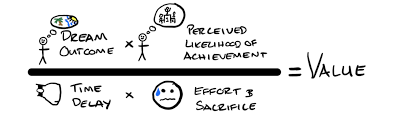
Alex Hormozi's Value Equation from $100M Offers. The higher your score, the easier your offer is to sell.
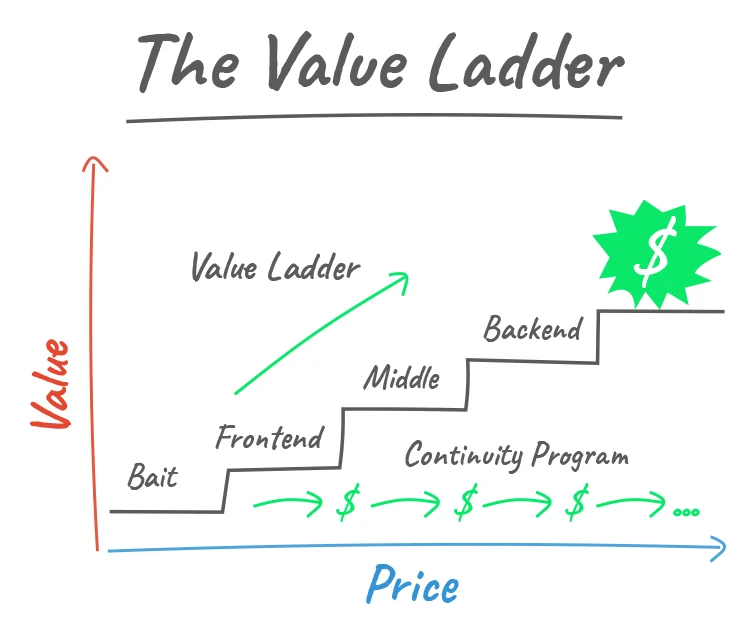
Understanding the Value Ladder
The Value Ladder structures your offers in ascending levels of value and price. Start with something irresistible and low-barrier, then build trust and deliver more value at each step up.
Why it works
The stages
Free value that builds trust and captures leads.
Low-ticket product that converts leads into buyers.
Your main product delivering the full solution.
Ongoing value through memberships or add-ons.
Premium, high-ticket solution for your best customers.
Framework: Russell Brunson — DotCom Secrets